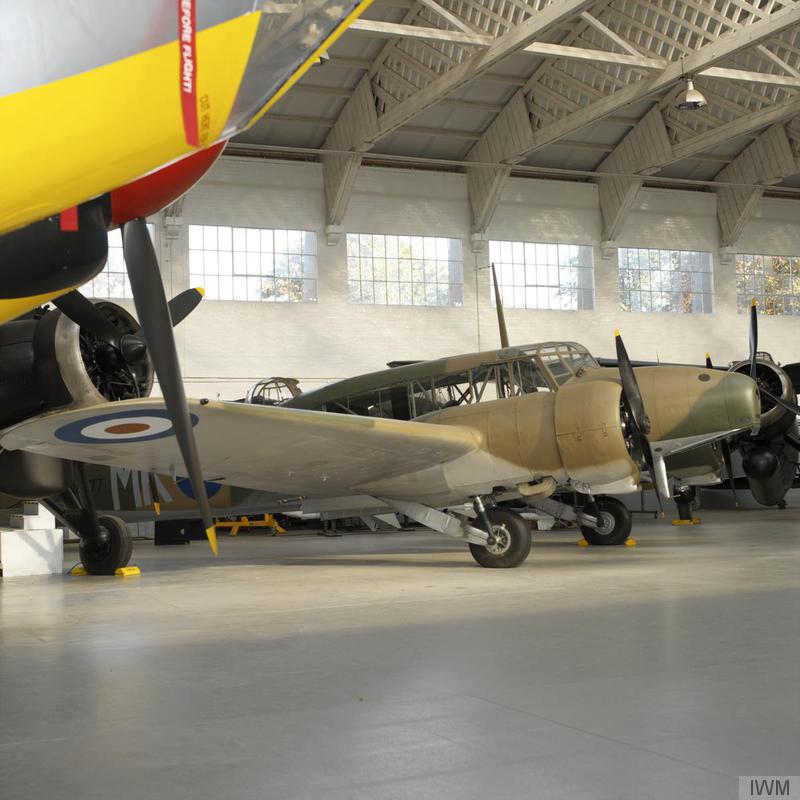
The Avro Anson first flew from Woodford on 24 March 1935 and went on to become one of the RAF’s most familiar and hard-working aircraft. Known affectionately as Faithful Annie, the Anson served with the RAF for more than three decades. In the years before and during the early stages of the Second World War, Ansons served with Coastal Command on general reconnaissance duties, but much of their wartime work was as a multi-engine trainer and light transport aircraft.
Avro Anson Mk I N5019 was built by Avro at Chadderton and had previously served with No. 75 Squadron and No. 148 Squadron before being allocated to No. 15 Operational Training Unit. This training unit had been formed on 8 August 1940 from elements of Nos. 75 and 148 Squadrons within No. 6 Group at RAF Harwell, with the purpose of training night bomber crews.
The Flight
On the night of 9 July 1940, N5019, coded EO, took off from RAF Harwell on a night cross-country training flight. While flying over the Welsh Marches and the hills of Mid Wales, the observer believed the aircraft was over England and advised the pilot that height could be reduced.
In darkness and poor visibility, the Anson was still over high ground. Shortly afterwards, the aircraft struck the northern slope of Y Gamrhiw, near Llanwrthwl, west of Rhayader and close to the Elan Valley.
The Crash on Y Gamrhiw
Four members of the crew were killed instantly when the aircraft hit the hillside. The pilot, Sgt Arthur Carris Smith RAFVR, survived but was seriously injured. Despite his injuries, he managed to make his way down from the crash site through the darkness in search of help.
Sgt Smith eventually reached Ty Coch Farm, where Mr Pugh gave what assistance he could and summoned help. An ambulance later arrived and Sgt Smith was taken to Builth Wells Cottage Hospital for treatment.
The four airmen who died were recovered from the hillside by a team sent from No. 11 Service Flying Training School.
Crew of Avro Anson N5019
| Name | Rank / Role | Outcome |
|---|---|---|
| Arthur Carris Smith | Sergeant, Pilot, RAFVR | Survived, seriously injured |
| Thomas Colvin Watson | Pilot Officer, Pilot | Killed |
| Christopher Joseph Dent | Sergeant, Observer | Killed |
| Arthur Williams | Sergeant, Wireless Operator | Killed |
| Hugh Hannan | Sergeant, Wireless Operator / Air Gunner | Killed |
Cause of the Accident
The Board of Inquiry attributed the accident to navigational error, following incorrect information transmitted by a ground observer. The crew believed they were clear of high ground and over safer country, but the aircraft was still among the hills of Mid Wales.
Note: Some modern accident listings record the date as 10 July 1940, reflecting the late-night timing of the flight and crash. Local accounts often describe the flight as taking place on the night of 9 July 1940.
Aftermath
Although Sgt Arthur Carris Smith survived the crash of N5019 and later recovered from his injuries, he was later posted to No. 97 Squadron. On 24 November 1941, while piloting an Avro Manchester, he was involved in a mid-air collision with a Hurricane. Sadly, there were no survivors.
Today, only small remains of Avro Anson N5019 are said to survive on Y Gamrhiw. Twisted and buckled fragments of metal on the hillside act as a quiet reminder of the lives lost during a training flight over the Elan Valley hills.
