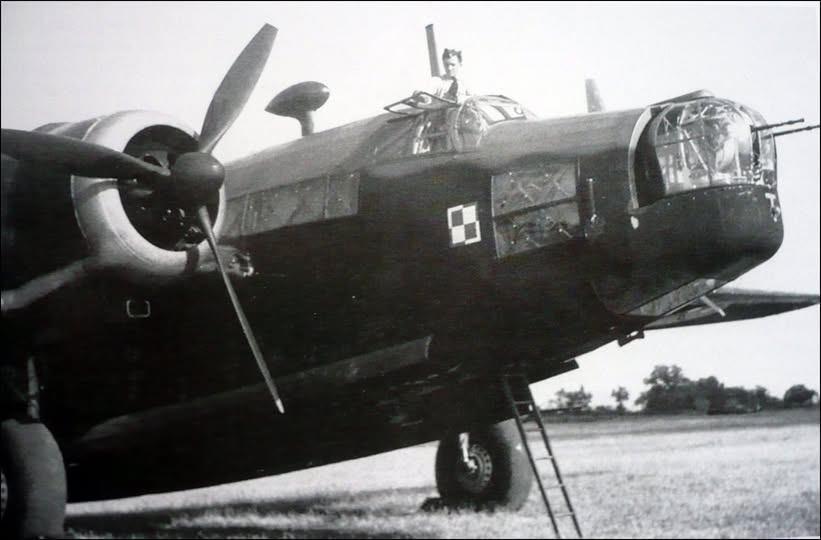
On 20 May 1942, a Polish Air Force crew flying Vickers Wellington N2813 took off from RAF Bramcote on a night-time training flight. The crew were serving with No. 18 Operational Training Unit, which used Wellington bombers to train airmen for operational service.
Their route brought them across the high ground of Mid Wales and the Elan Valley. The aircraft had left its base shortly before midnight in worsening weather conditions. Although it was May, the aircraft was flying at altitude, and icing became a serious problem.
The Crash
As the Wellington crossed the hills of Radnorshire, one of the engines iced up and soon stopped altogether. In darkness and poor weather, the aircraft began to lose height over the Elan Valley.
Sgt P. Bakalarski, the pilot, gave the order for the crew to abandon the aircraft. The crew successfully baled out and came down further down the valley. The Wellington continued on before crashing at around 2.50 am on high moorland at Esgair Pen-y-gareg, near the old Rhayader to Aberystwyth road.
The Crew
The crew of N2813 were all Polish Air Force airmen. All survived the crash.
| Name | Service | Role | Outcome |
|---|---|---|---|
| Sgt P. Bakalarski | Polish Air Force | Pilot | Survived |
| P/O H. Falinski | Polish Air Force | Crew | Survived |
| Sgt Z. Kobiela | Polish Air Force | Crew | Survived |
| Sgt J. Olszewski | Polish Air Force | Crew | Survived |
| P/O B. Boguszewski | Polish Air Force | Crew | Survived |
A Knock at Treheslog Farm
After baling out, the airmen landed further down the valley. In the early hours of the morning, Tom Evans of Treheslog Farm was woken by a furious hammering at the door. To his surprise, he opened it to find one of the Polish airmen standing outside.
The remaining crewmen were later found safely. Unlike many wartime aircraft crashes across the Welsh hills, the crew of Wellington N2813 all survived.
Remembering the Incident
The crash of Wellington N2813 is another reminder of the hazards faced by aircrews training over Mid Wales during the Second World War. Even far from enemy action, night flying, poor weather, high ground and mechanical failure made these flights extremely dangerous.
